Model UN Coaching
A real training system for Model United Nations.
Online Model UN coaching that runs year round, taught by people who have competed, won, and chaired on the circuit. Students climb a structured skill curriculum, sit regular mock committees, and leave each class with feedback in writing.
Term 1 · 2026/27 · Sep 1 – Dec 18
Feedback in writing at the end of each class
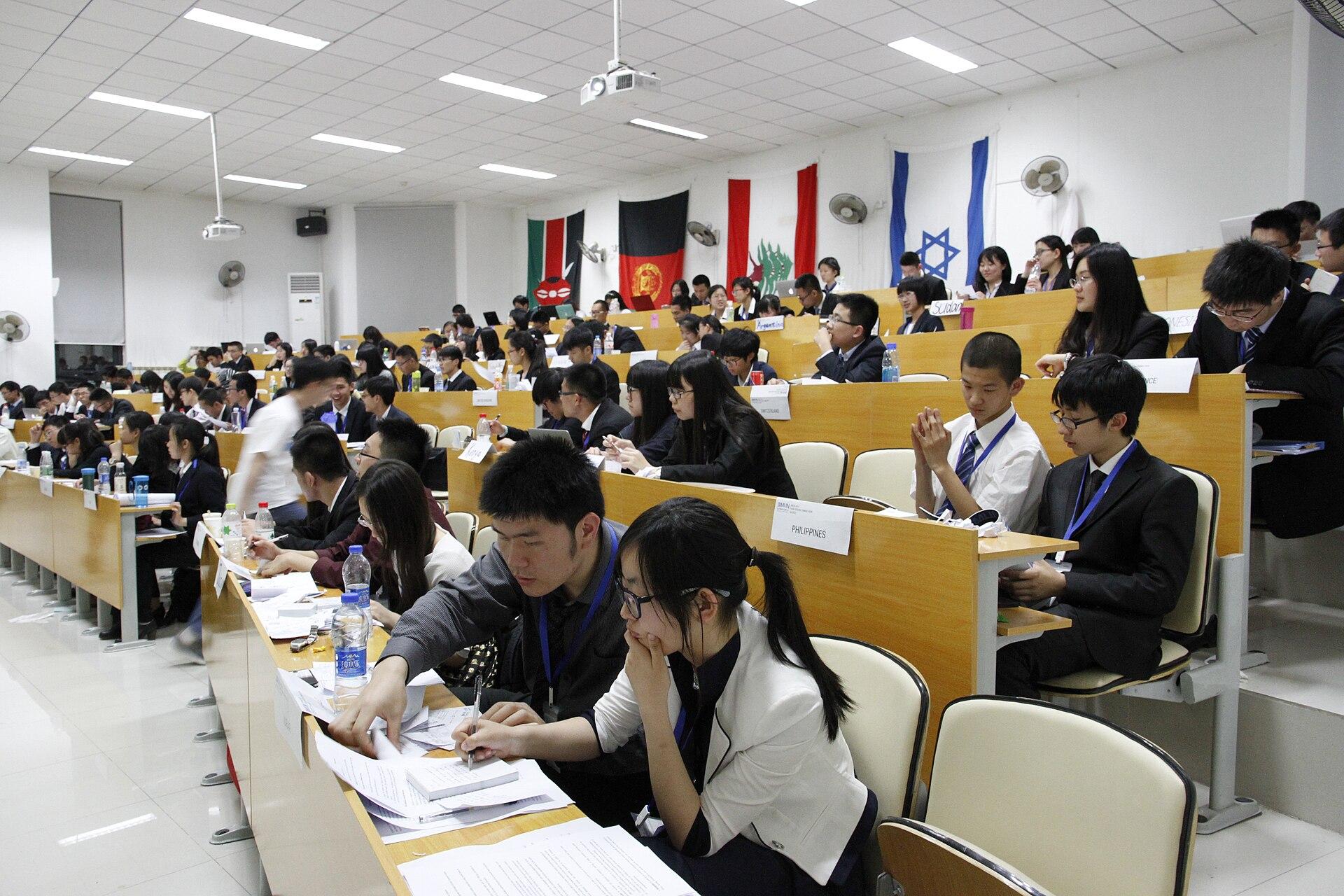
Photo: BFSU MUN Association, CC BY-SA 3.0
We prepare delegates for
NHSMUNHarvard MUNYale MUNBerkeley MUNTHIMUNOnline MUN- 500+
- students trained by our coaching team
- 7
- course levels, Beginner I to Scholars
- 10–18
- ages we coach, first conference to crisis
- 100%
- Model UN focused
Training that looks like committee
For most students, conference prep means skimming the background guide a few days out. Award-winning delegations work differently, and so do we: skills get drilled in isolation, tested in simulation, and reviewed afterward, on a cycle that repeats across the whole season.
Drill
The core skills get separate reps before they ever meet in committee: how to research a country position, how to write the kind of position paper a chair remembers, speech practice against the clock, and clause-by-clause resolution drafting.
Simulate
Then students take the floor. Mock committees work through real agenda topics under full conference conditions, from moderated and unmoderated caucus to bloc formation and amendments contested live.
Review
Simulations do not end when the gavel falls. The coach debriefs the room the way a chair would, and after class the student takes home written notes that both they and their parents can make sense of and act on.
Progress
Across the term we chart each delegate against the four skill areas: research, speaking, negotiation, writing. Parents never have to guess: the record shows current strengths, the gaps still open, and the next target.
The activity that tests every skill at once
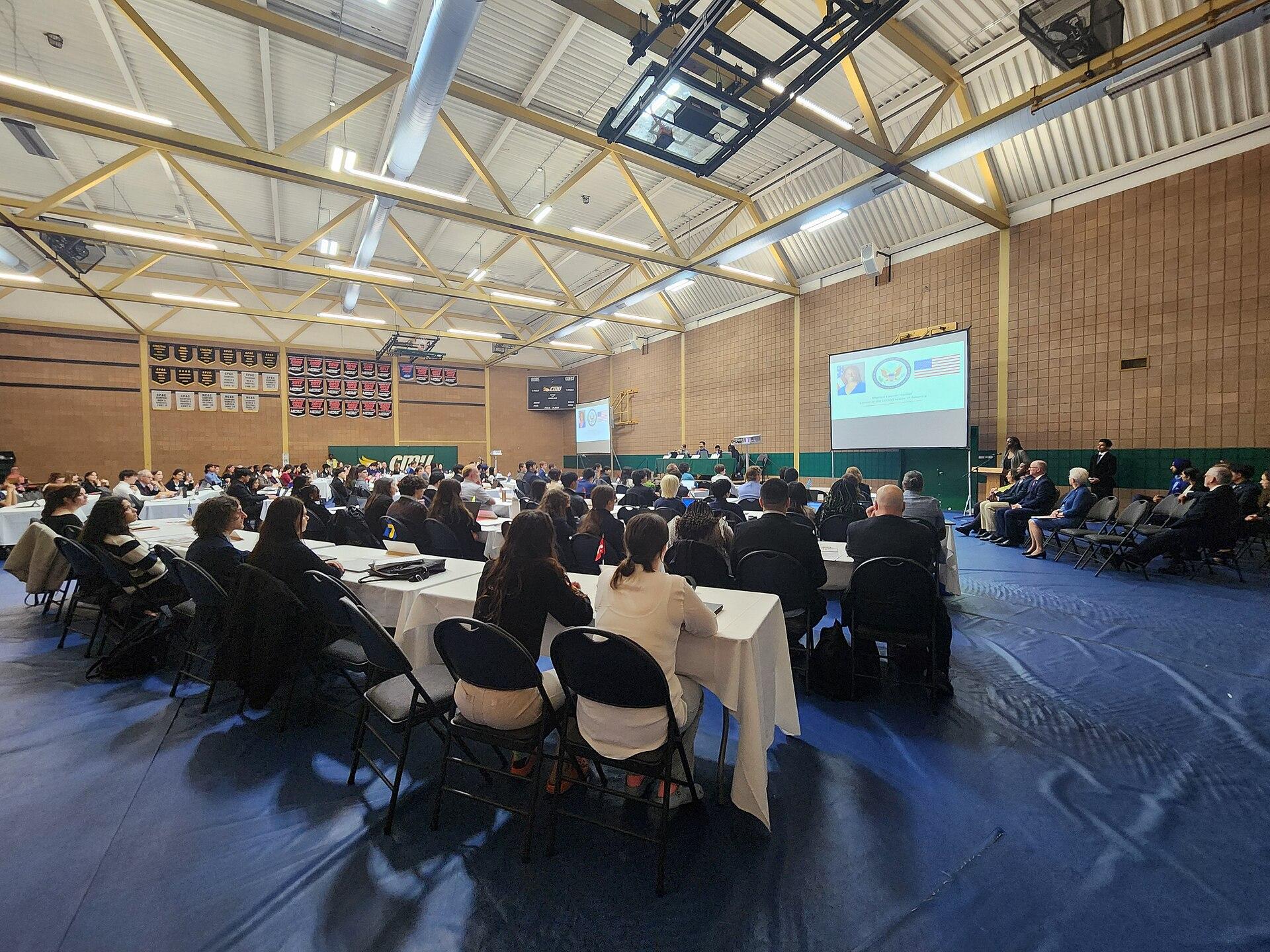
Model United Nations is a simulation of the real UN. Each student represents a country in a committee, debates a live global issue, and works to pass a resolution. Roughly 400,000 students take part every year across hundreds of conferences worldwide, from school gyms to Harvard and The Hague.
A single conference weekend tests research, public speaking, negotiation, and writing all at once. With speeches that often run under two minutes, a delegate cannot coast on notes; the room can tell who did the work. Best Delegate and the other awards go to the students who prepared like it mattered, and preparation is the one variable a coach can change.
400k+
students take part worldwide each year
1 country
each delegate speaks for a nation, not themselves
< 2 min
typical speech: every second has to count
1 award
Best Delegate: the one everyone is chasing
Programs
A seven-course ladder. Join at your level.
From a first placard to chairing the room: seven term-length courses from Beginner I to Delegate Academy Scholars, each split into Middle School and High School groups, plus private 1-on-1 coaching alongside. A placement check at the free trial finds the right rung.
Step 1 · Most popular
Beginner I
For students starting Model UN from zero: rules of procedure, country research, position papers, and a first opening speech, finished with a scaffolded mock committee.
Ages 10–17 · Beginner
Program details →Step 2
Beginner II
The conference-readiness term: deeper research, competitive position papers, first caucuses, and a full-length mock conference run at real pace.
Ages 10–17 · Beginner
Program details →Step 3
Intermediate I
For delegates ready to shape committee: moderated and unmoderated caucusing, negotiation, bloc-building, and a first co-authored working paper.
Ages 10–17 · Intermediate
Program details →Step 4
Intermediate II
The endgame term: resolution drafting, amendments, voting procedure, and award strategy, closed with a full mock General Assembly.
Ages 10–17 · Intermediate
Program details →Step 5
Advanced I
Crisis committees from the ground up: crisis notes, directives, portfolio powers, and arc planning, drilled in live, updating simulations.
Ages 10–17 · Advanced
Program details →Step 6
Advanced II
The hardest rooms on the circuit: Security Council, historical committees, joint crisis, and press corps, rehearsed at flagship pace.
Ages 10–17 · Advanced
Program details →Step 7
Scholars
The honors capstone: chairing, background-guide writing, judging, and mentoring, ending with a full simulation the Scholars design and run themselves.
Ages 10–17 · Scholars
Program details →Any level · Most popular
1-on-1 Coaching
Private coaching built around one student and their next conference: committee-specific research, speech drills, bloc strategy, and written feedback after every session.
Ages 11–18 · All Levels
Program details →Most students walk into committee underprepared. Ours don't.
Coaches from the circuit
Your coach has run Yale MUN committees from the secretariat side, spoken at TEDx events, or judged internationals as chief adjudicator. The drills come from what actually earns a gavel, not from a generic public-speaking playbook.
Built on a real training cycle
A weekly class rhythm with mock committees built in at regular intervals, and preparation pointed at the specific conferences on your student's calendar. The cycle holds for the whole season.
Feedback you can hold
A pat on the back is not feedback. After each class your student receives written notes that cover research, speaking, negotiation, and writing, with the next thing to fix named in plain terms.
From the diplomatic record
“Your experience in this Conference will give you a full taste of the complexity of international relations, the intricacies of negotiations among diverse peoples and perspectives, the challenges of achieving consensus and the patience required to win progress. This has been my life for the past five years.”
Ban Ki-moon · UN Secretary-General 2007–2016, addressing the Global Model UN Conference, Incheon, 2011
Meet the coaches
Every session is led by someone who has done this at a high level: run committees from the secretariat side, spoken on international stages, and judged the rooms your delegate will compete in.
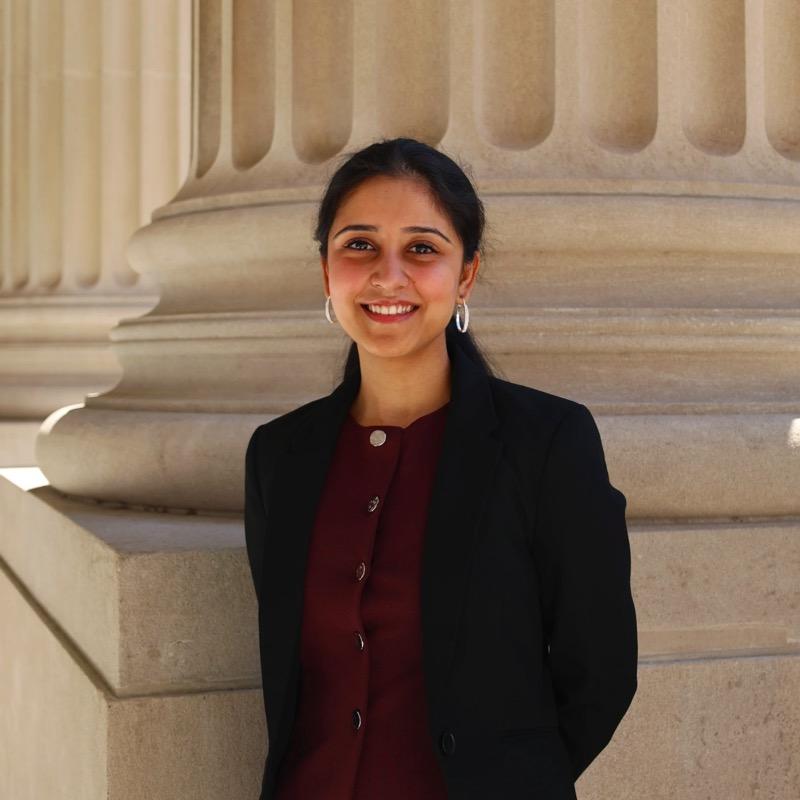
Netra Easwaran
Model UN Coach
Netra studies Political Science at Yale, where she competes on the Model UN team and serves as Vice President of the Yale International Relations Association. She has run conferences from the secretariat side as Director-General of Committees for Yale MUN Dubai and Yale MUN South Asia and as Crisis Director for Yale MUN Europe, and she debated with the Yale Debate Association on the APDA circuit.
- Yale University, Political Science
- Director-General, Yale MUN Dubai & South Asia
- Crisis Director, Yale MUN Europe
- Yale Debate Association
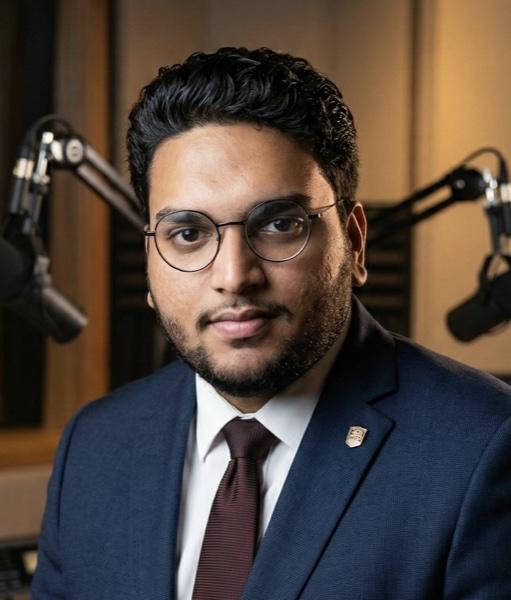
Amaan Ibrahim
Model UN & Public Speaking Coach
Amaan has delivered six TEDx talks and taken first place in more than 60 public speaking competitions; in 2024 he added the title at the Dubai Police National Security Debate Championship. From his base in the UAE, he coaches the part of Model UN that decides awards: standing up and delivering a position out loud, on the clock, in front of a full room.
- Six-time TEDx speaker
- Dubai Police National Security Debate Champion 2024
- Winner, 60+ public speaking competitions
- University of Birmingham Dubai
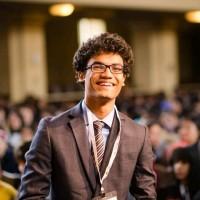
Shaurya Chandravanshi
Argumentation & Strategy Coach
Shaurya built his Model UN record as a Head Chair on the UAE circuit, where his committees ran from the Security Council through crisis rooms and his work earned a Best Chair award. At university he debated for the London School of Economics; his results there include a top-ten speaker ranking at the World University Debating Championship. He also represented the UAE on its national debate team. He now judges international tournaments as chief adjudicator, so the perspective he teaches from is the one that decides results.
- Model UN Head Chair, UAE circuit (Best Chair award)
- London School of Economics debate team
- Top-10 speaker, World University Debating Championship
- Former UAE national debate team
- Chief adjudicator, international tournaments
Questions parents ask us
What is Model United Nations?+
Model UN is an academic simulation of the United Nations. Students represent countries as delegates, debate real global issues in committee, write resolutions, and compete for awards like Best Delegate. Roughly 400,000 students take part worldwide each year across hundreds of conferences.
Who are the classes for?+
Middle and high school students, ages 11 to 18. Complete beginners start in MUN Foundations; students who already compete usually go straight into 1-on-1 coaching or the Crisis Intensive. All coaching is online, so students can join from anywhere.
My child has never done MUN. Can they still join?+
Yes. MUN Foundations assumes zero experience. We teach the rules of procedure, how to research a country position, and how to write and deliver a first speech, then run a full mock committee so the first real conference is never the first time.
How is coaching delivered?+
Live online sessions over video call. Every session ends with written feedback covering research, speaking, and strategy, so students and parents always know what improved and what to work on next.
Does Model UN help with college admissions?+
It can, with a caveat: admissions officers see plenty of students who simply attended conferences. What stands out is sustained commitment plus results, like awards, leadership roles, and chairing. That is exactly what our coaching aims at.
How do I start?+
Book a free trial class. Your student joins a live session, meets a coach, and gets an honest written placement recommendation before you pay anything.
The first class is a free trial
Your student sits in on a live session and works with a coach; afterward you receive a frank placement recommendation in writing. Payment comes later, if at all.
Book Your Free Trial